
Mar ReCon Annual Surveys – Birds
As part of the Mariculture Research and Restoration Consortium (Mar ReCon), we conduct four surveys annually (March, May, July, November) to understand if and how mariculture development and operations affect marine bird distribution and community composition. These surveys correlate with breeding and non-breeding periods for birds, as well as the growing and harvesting schedules at the farms. Surveys are conducted in Simpson Bay, Sheep Bay, and St. Matthew's Bay, and surveys in each bay take about two hours.
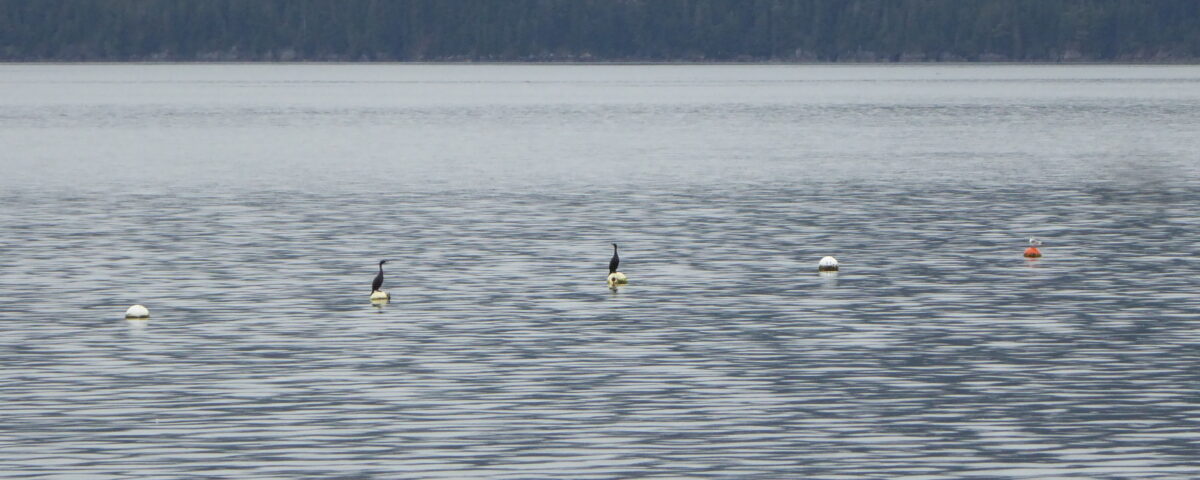
We collect data on which bird species are seen on the survey, their abundance, and their behavior in bays with and without mariculture infrastructure. All bird sightings within 150m of the transect line and marine mammals within 1km are recorded. These data will tell us which bird species are found around mariculture and their densities, and how that differs from areas that have no infrastructure. We will then be able to assess if these species are using the mariculture structures (loafing on buoys) or are attracted to the farms because of food sources (prey may be more concentrated around or attracted to the mariculture structures).
-
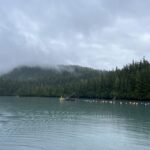
- Scenic view from one of the kelp farms.
-
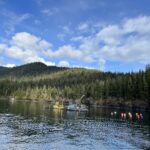
- Scenic view from one of the kelp farms.
-
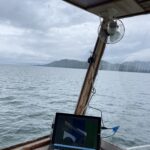
- View from inside of the surveyor booth.
-
- Scenic Ocean View.
-
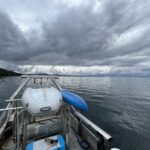
- View from the top of the boat where the surveys are conducted.
-
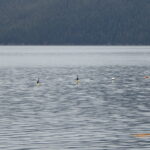
- Cormorants and Black-legged Kittiwakes on mariculture farm equipment.