
Micro Acoustic Tracking of Juvenile Salmon
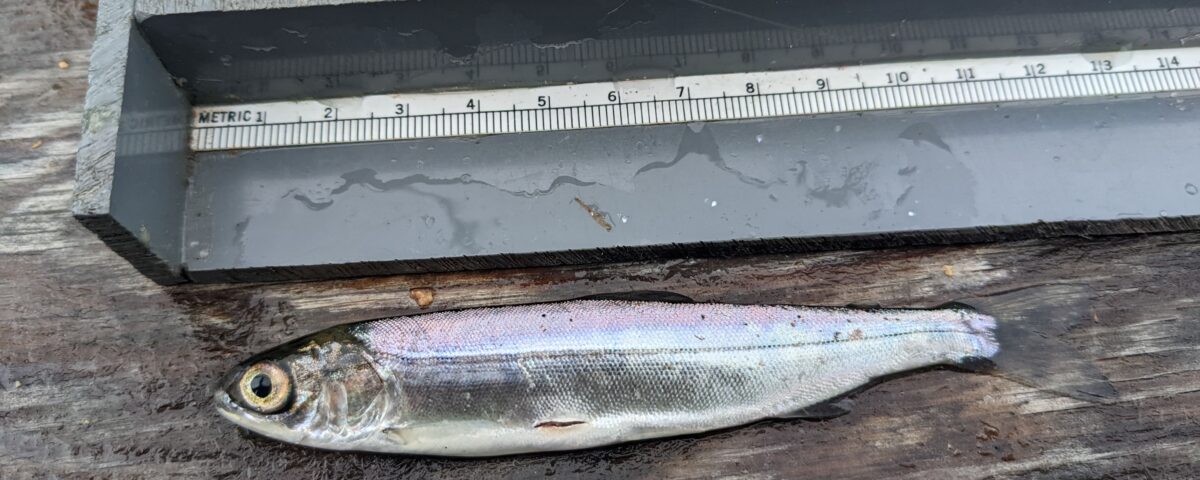
The Prince William Sound Science Center has a pilot project to explore the use of new acoustic tracking technology to study juvenile salmon during their smolt migration. A salmon smolt is the period of time during the spring when they leave nursery areas and migrate downstream to the ocean. In June 2025, Dr. Pete Rand and field technician Jasmine Becker traveled to Crosswind Lake in the Gulkana River Watershed, which is a major tributary to the upper Copper River. While there, they inserted micro-acoustic tags (15 mm X 3 mm, 210 mg - not much bigger than a couple of grains of rice!) into the body cavity of young sockeye salmon that were captured as they migrated from the lake.
These juvenile salmon only migrate at night, which is believed to be a strategy to avoid visual predators. This meant that our researchers had to catch the fish at midnight. The fish that are a part of this project were captured in a fyke net, a cone-shaped net with hoops and broad wings. Fish were transferred to covered 5-gallon buckets with aquarium aerators along the riverbank and held until morning. Fish were processed one by one, carefully following animal care and use guidelines, including the use of anesthesia. Following surgery, they were returned to the buckets to recover. The surgical process took 2-3 minutes per fish, and fish were fully recovered in 2-3 minutes following surgery. Fish were held in the buckets for 24 hours post-surgery. We included an equal number of "control" fish handled similarly to the tagged fish but did not undergo surgery. All our fish recovered quickly and survived through the entire holding period.
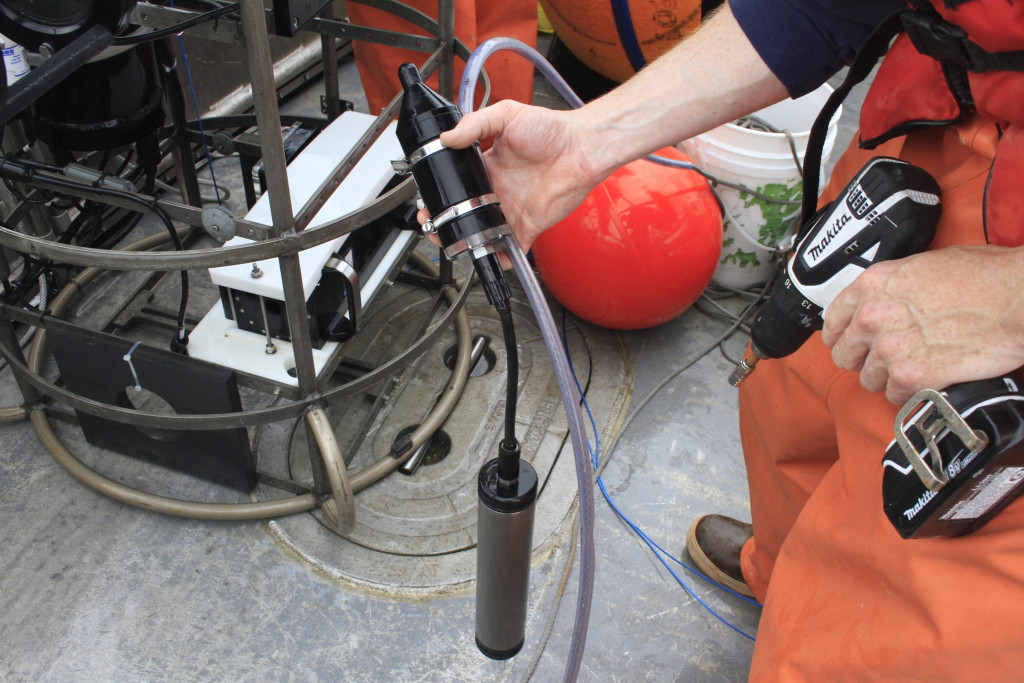
The tiny micro-acoustic tags send a strong acoustic signal ("ping"). Dr. Rand conducted "range tests" on a lake and determined that these signals can be detected from over 150 m away. That is one and a half American football fields away! This is encouraging and builds confidence that we'll be able to track these fish all the way to the lower river delta and even out at sea.
We are working on developing monitoring programs to cover the entire life cycle of salmon in the Copper River. There has been much attention on the adult spawning migration phase through sonar and weirs to count escapement, age-sex-length sampling of harvested fish, radio tracking studies of adults, and salmon health/physiological stress sampling of adults. Still, there have been very few studies, particularly in recent years, on the early life history and juvenile stages. Each of the different rivers flowing into the mainstem Copper River have unique characteristics, and we expect each one will respond differently as our climate changes. For example, some are heavily influenced by the presence of glaciers and run cold and silty, whereas others do not have glaciers and tend to run clear and warmer in the summer. Understanding how changes in river conditions will impact salmon migration, survival, and productivity will help us manage for sustainable runs in the future.
This is a pilot project. Our hope is to gain additional funding to scale this up to a comprehensive study that will allow us to compare the fates of these smolts originating from different river systems in the upper Copper River basin.
-

- Fyke net, deployed and maintained by PWSAC, to count smolts migrating from the lake each spring.
-
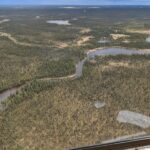
- Crosswind Lake Camp, maintained and operated by PWSAC to count smolts each spring. You can see the fyke net in the middle of the image.
-
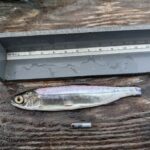
- The fish we processed were on average about 8 grams in mass and 110 in length. This is an individual showing the scalpel incision and the tag inserted into the body cavity.
-
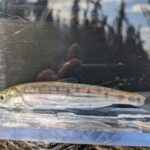
- A sockeye salmon smolt. “Smoltification” involves physical and physiological changes in juvenile salmon to prepare them for life in the ocean.
-
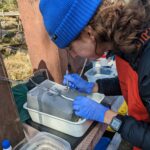
- Jasmine making a scalpel cut through the ventral body wall of a juvenile salmon, just big enough to allow us to insert the acoustic tag.
-
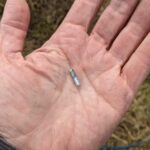
- The acoustic tags are very small, not much bigger than a couple of grains of rice.
-

- We explored Crosswind Lake.
-

- Jasmine Becker on Tolsona Lake doing “range tests” on acoustic tags
-
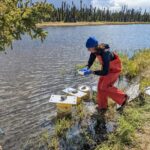
- Jasmine Becker transferring juvenile salmon to holding buckets along the riverbank