
Pacific Herring & Pink Salmon Interactions Research Cruise
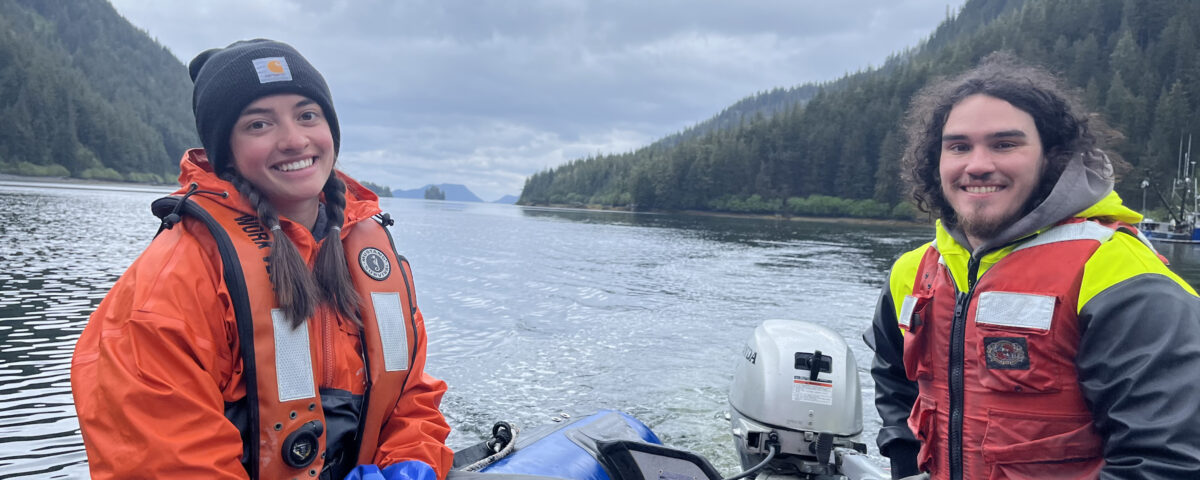
In June 2025, PWSSC research and field technician Krimson Anderson went on a research cruise on R/V Solstice to investigate the ecological interactions between Pacific herring (Clupea pallasii) and pink salmon (Oncorhynchus gorbuscha). The goal of this work is to understand how predation, competition, and disease influence their survival and recruitment. This work is part of a multi-year study combining fieldwork, lab analysis, and modeling.
Specifically, we are investigating whether pink salmon prey on larval herring during offshore migrations, whether both species compete for similar prey, the prevalence of a disease called Viral Erythrocytic Necrosis (VEN) in both species, and environmental and biological factors affecting pink salmon survival. We are using techniques like stomach content analysis, DNA barcoding, and stable isotope analysis to understand diet and trophic interactions, along with data to build bioenergetic models of predation.
Several methods were used to collect fish samples. In field biology, sometimes you need to be creative and opportunistic. Occasionally, the crew was jigging on sabiki poles for adult herring or scooping fry straight out of the water with a dip or cast net! However, our primary methods include purse seining and beach seining.
A typical day on a boat is long and intense. Research tasks include collecting fish using various methods, deploying plankton tows and CTDs, and processing fish samples. Processing fish includes collecting age, length, and weight data, preserving blood smears on microscope slides to send off for analysis, and performing a stomach dissection.
The boat visited approximately five sites in the western half of Prince William Sound, focusing on migratory corridors used by juvenile pink salmon. Sampling locations were chosen based on historical data and aimed to capture spatial and temporal variation in species interactions.
This research is vital for understanding the reciprocal nature of interactions between pink salmon and Pacific herring. Ultimately, this work contributes to a broader understanding of ecosystem dynamics in a region still recovering from the Exxon Valdez oil spill.
-
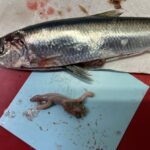
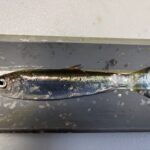
- Fish and dissected fish stomach
-
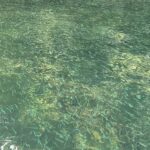
- schooling fish
-
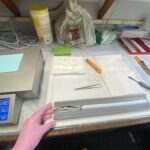
- Fish waiting to be processed
-
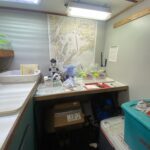
- Research Lab onboard a boat
-
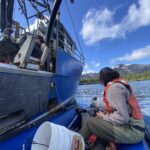
- Solstice seining
-
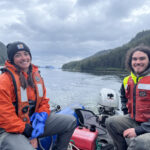
- Krimson A. (PWSSC) and Jordan V. (ADFG) sitting on vessel
-
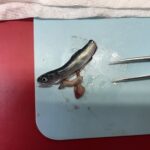
- Dissected fish stomach
-
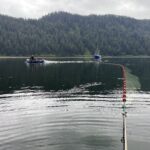
- Seine fishing
-
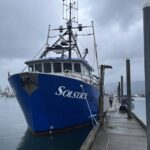
- R/V Solstice
-
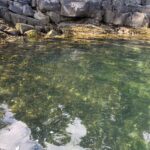
- School of fish